 Black friday 75% Off:
Quick Answer: What to Know Before Buying a Tiered Cake Stand
A tiered cake stand is a multi-level structure for presenting cakes and desserts at events and on buffet tables. Options range from 2- and 3-tier serving stands to larger modular display platforms. Size, tier count, material, and intended use matter most. Some modular stands—such as Momentree’s configurable display platform—can be styled for cake and dessert displays, though it’s a visual display system, not conventional food-contact serveware.
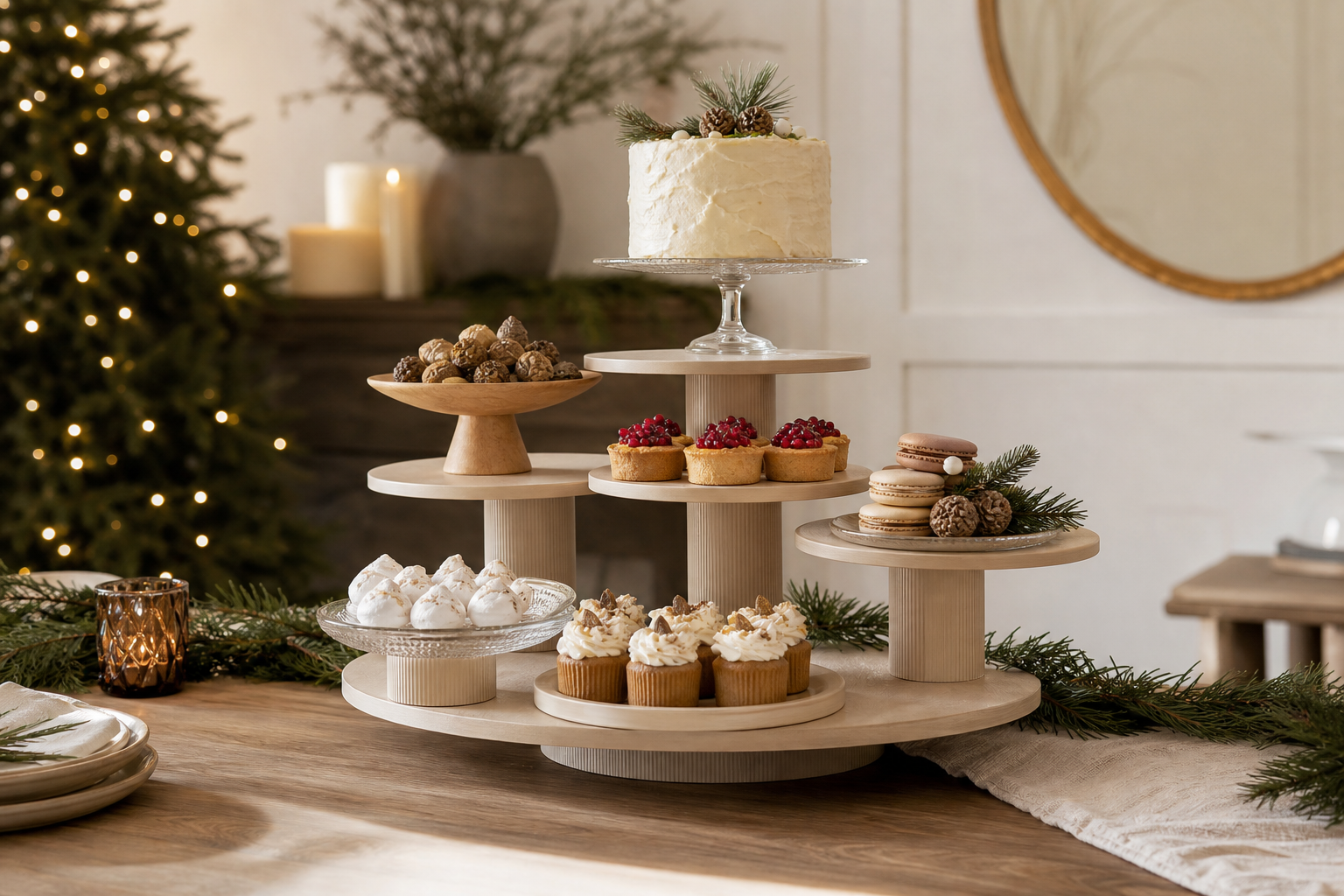
Key Takeaways: Tiered Cake Stand Selection at a Glance
- Most shoppers choose a 2 tier cake stand or 3 tier cake stand; multi-tier or tall configurations exist for larger displays.
- Materials (porcelain, glass, metal, marble, wood, acrylic, MDF) affect look, durability, and care.
- Match the stand to how you’ll use it: direct serving vs. display/styling for events, weddings, and retail.
- Modular platforms like Momentree allow adjustable tier counts and flexible layouts for dessert and cake displays without being standard food-contact stands.
Understanding Tiered Cake Stands: Types and Main Features
Common types and structures
- Fixed-tier servers: Classic 2–3 tier cake tier stand designs used for serving or buffet presentation. Tiers are usually permanently connected to a central post or frame.
- Collapsible/knockdown servers: Break down for storage and transport, helpful for caterers and pop-up events.
- Modular and adjustable display stands: Multi-level systems that let you change the number of tiers and overall height. These are ideal when you want visual flexibility or need to reconfigure for different events. Modular platforms focus on display and styling and are not automatically food-contact serveware.
Tier counts and scale
- 2-tier stands: Great for small gatherings, tea service, and bite-size desserts.
- 3-tier stands: The most common for parties and showers, offering more surface without much extra footprint.
- Multi-tier/tall stands: Useful for large dessert tables, showpieces, or retail merchandizing. Prioritize stability and stated load capacity for heavier or taller builds.
Materials overview: looks, strengths, and care
| Material | Typical Look | Pros | Considerations |
|---|---|---|---|
| Porcelain/ceramic | Classic, refined | Elegant presentation | Often hand-wash; may chip if mishandled |
| Glass | Clean, transparent | Showcases desserts; pairs with domes | Hand-wash; dome height can limit cake height |
| Metal (stainless/steel alloys) | Modern to classic | Durable; stable bases available | Check stated weight limits and care guidance |
| Marble + metal frame | Luxe, substantial | High-end look; weight adds stability | Heavy; generally hand-wash |
| Wood | Warm, natural aesthetic | Versatile styling | Care varies; confirm food-contact finish if serving directly |
| Acrylic/plastic | Light, contemporary | Portable; event-friendly | Can scratch; check sturdiness |
| MDF (engineered wood) with finish | Wood-look tiers | Cost-effective display surfaces | Not inherently food-contact; use liners/platters if serving directly |
Notes on form and function:
- “Cake stand” can mean a single-pedestal plate or a multi-tier server; many retailers label multi-level servers as “tiered dessert stands.” Distinguish serving pieces from general display risers used in retail merchandising.
- Decorating turntables are tools for icing and assembly; transfer finished cakes (on boards) to a serving stand or platter for presentation.
Specialty and high-capacity displays
- Event showpieces and buffet towers: Choose wider bases, strong frames, and manufacturer-stated load capacity appropriate for your plans.
- Retail or décor displays: Visual-merchandising risers and modular stands focus on styling flexibility, not food contact. When food will touch a surface, use a food-safe platter/liner or confirm the surface is food-contact appropriate.
How to Choose the Right Tiered Cake Stand
- Size for your desserts and cake boards
- For whole cakes on a pedestal top, select a surface at least as large as the cake board; many bakers advise equal-to or larger than the board, and some recommend additional margin. Avoid rimmed tops that prevent boards from sitting flat.
- Confirm tier count and layout
- A 2 or 3 tier cake stand works for most parties. Go multi-tier or tall when you need more display area or a show-stopping centerpiece. Ensure the footprint and base stability match the height.
- Match material to use and care
- Serving stands: Pick materials and finishes you’re comfortable cleaning and displaying (e.g., porcelain, glass, marble, metal, wood). Follow maker care guidance.
- Display-first stands: For merchandizing or styling, a modular display system can provide more flexibility. If any food will contact the surface, place an appropriate food-safe plate or liner on top.
- Stability and capacity
- Check the maker’s weight guidance and review base width/structure—tall/narrow pedestals can be less stable than wide/heavy bases. For multi-tier towers, confirm the stated load capacity.
- Assembly, transport, and storage
- Collapsible or modular builds pack down for transport and storage. If you frequently re-theme events, consider a system that lets you add/remove tiers.
- When to consider a modular/adjustable system
- If you host different event types, need a tall display one week and a shorter layout the next, or want to present desserts, favors, signs, or décor—not just cakes—a modular platform can pay off in flexibility.
Spotlight: The Momentree Holiday Display Tree for Dessert & Cake Displays
The Holiday Display Tree is Momentree’s reusable, modular display platform designed for multi-occasion styling. It can be configured for dessert and cake display applications while remaining a visual display system rather than conventional food-contact serveware.
- Modular identity: One Stand. Endless Possibilities.
- Six round display tiers (MDF tier boards with a wood-grain finish) supported by a black metal center structure and a cross-shaped metal base.
- Tier diameters: 8, 11.8, 17.7, 23.2, 27.2, and 31.5 inches; adjacent tiers are spaced 14 inches apart in the full configuration.
- Adjustable configuration: Add or remove tier modules to change overall height and the number of display levels; fully assembled height is 78 inches.
- Stated total load capacity: over 220 lbs (100 kg). Do not exceed product weight guidelines.
- Practical handling: Foldable metal stand; disassembles for flat-pack storage; base equipped with rolling wheels for mobility.
- Approved use cases include dessert and cake display, wedding and seasonal setups, champagne/cocktail towers, retail merchandising, and home décor styling.
If direct food contact is planned for any display, use a separate food-safe platter or liner on top of the tiers, or choose a serving stand specifically marketed as food-contact ready.
Mistakes to Avoid When Buying or Using Tiered Cake Stands
- Choosing a stand that’s too small for your cake board or dessert spread; rimmed tops can interfere with cake boards.
- Underestimating stability and load needs—tall displays and dense desserts require wider bases and confirmed capacity.
- Confusing display platforms with food-contact serveware; when in doubt, use food-safe platters/liners or select a stand marketed for direct serving.
- Overlooking storage and assembly: a foldable or disassemblable design can save time and space between events.
- Ignoring event safety and setup practices—secure the structure, level the base, and supervise children at busy celebrations.
Momentree Expert Tips: Getting the Most Out of Your Display Stand
- Plan your visual flow: Place the tallest cake or centerpiece on a lower, deeper tier for stability, then graduate sizes upward. Use lighter items on higher tiers.
- Fit to tier sizes: Match platters, boards, and dessert trays to the actual tier diameters for clean edges and balanced composition.
- Event safety first: Set up on a level surface, tighten all fasteners, and secure the structure firmly before guest arrival. Supervise children around the display.
- Care and storage (Momentree): Dust tiers with a soft cloth. Remove garlands and accessories before storage. Store the stand flat in a dry area. Keep away from open flames or high heat. Use indoors or in covered outdoor areas.
Frequently Asked Questions About Tiered Cake Stands
What should I look for when buying a tiered cake stand?
Confirm the stand matches your dessert size and board diameter, choose the right number of tiers, verify material/care needs, and check stability and stated capacity. If you need flexibility for different events, consider a modular display platform and use food-safe platters/liners when serving directly.
Are multi-tiered stands only for cakes, or can they be used for other desserts?
They’re great for cupcakes, pastries, macarons, fruit, and favors—especially 2-tier and 3-tier stands. Larger modular platforms can style a full dessert table or themed display, not just cakes.
What are the advantages of a modular or adjustable tiered stand?
Reconfigurability. You can add or remove tiers to change height and layout, reuse the same base for multiple occasions, and style beyond desserts (e.g., welcome stations or retail displays). This flexibility suits planners who host varied events.
Is the Momentree Holiday Display Tree suitable for serving food?
Momentree’s platform is a modular display system, not conventional food-contact serveware. If any food will touch a surface, place it on a separate food-safe platter or liner, or use a serving stand marketed for direct food contact.
How do I clean and store a large multi-tier display stand?
Follow the maker’s care guidance by material. For Momentree, dust with a soft cloth, remove accessories before storage, and store flat in a dry area. Disassemble or fold the structure as designed.
What materials are most durable for cake or dessert displays?
Metal bases offer sturdiness; marble adds weight and a luxe look; porcelain and glass look refined but typically require careful handling. Wood and MDF with decorative finishes are popular for display styling—use food-safe platters/liners for direct contact.
How many tiers do I need for my event?
Small gatherings: 2 tiers; showers and parties: 3 tiers; large events or showpieces: multi-tier/tall configurations. Ensure the footprint and base stability match the height and load.
Can I use a display platform for weddings or retail events?
Yes. Modular display platforms are well-suited to weddings, welcome stations, and retail merchandising when you want to re-theme the same structure across occasions. Use serving pieces or liners for any direct food contact.
Related Guides & Resources
- Tiered display stand buying strategies for multi-event flexibility
- Wedding display stands and dessert table planning
- Dessert table ideas and event styling fundamentals
Sources & Evidence
- CAKE STAND | Cambridge Dictionary
- Williams Sonoma – Cake Stands & Dessert Trays (incl. Tiered Dessert Stands)
- Crate & Barrel – Tiered Stands
- WebstaurantStore – Display Risers (merchandising focus)
- FDA Food Code 2022 – Food-contact surface characteristics
- Wilton – How to Fill & Layer a Cake (turntable vs serving stand)
- Round House Bakery – Cake Size & Cake Stand Guide (board/stand sizing)
- Kayli Bakes Cakes – Wedding FAQs (avoid rimmed stands)
- TableCraft Spec Sheet – Example stand and cover dimensions/capacity note


