 Black friday 75% Off:
Quick Answer
Wedding cake stands include both traditional food-contact stands (pedestal plates, metal plateaus, acrylic towers) and display-focused solutions (modular tiered platforms). The right choice depends on how you’ll present and serve: food-contact for direct plating and cutting, display platforms for creative styling using cake boards/plates. Match the stand to your cake’s size, weight, venue conditions, and the visual story you want at the reception.
Key Takeaways
- Start with purpose: direct serving on a food-contact stand vs. styling on a display platform using cake boards/plates.
- Size and stability matter most—confirm cake board diameter, total weight, and table placement with your baker/venue.
- Modular platforms unlock layered dessert-and-decor vignettes beyond a single pedestal.
- The Momentree Holiday Display Tree is a modular, six-tier display platform for weddings and events; it’s not a traditional food-contact cake stand.
Types of Wedding Cake Stands and Displays
A variety of formats serve different cakes, venues, and aesthetics. Use the quick comparison below, then consult your baker for fit and safety.
| Type | Typical use | Pros | Watch-outs |
|---|---|---|---|
| Pedestal stand (glass, ceramic, marble, metal) | Single or small multi-tier cakes | Classic look; raised presentation | Base width and mass vary—light pedestals can wobble under heavy cakes |
| Cake plateau (often metal, 16–22 in.) | Multi-tier wedding cakes | Wide, stable footprint; ornate finishes | Confirm usable flat diameter vs. rimmed edges |
| Multi-tier cupcake/dessert tower (acrylic/wood) | Cupcakes + small cutting cake | Modular tiers; capacity scales to guest count | Top plate must fully fit cutting cake board; stability depends on design |
| Domed/cloche stand | Single cake or display protection | Visual protection from dust; elegant | Diameter/height can limit elaborate toppers |
| Modular display platform (e.g., tiered multi-level system) | Layered dessert-and-decor vignette | Flexible tier count/height; reconfigurable layouts | Not a food-contact cake stand—use boards/plates; plan stability and space |
When to choose each
- Choose a pedestal for a classic single-cake moment where the base is sturdy and the cake is modest in weight.
- Choose a cake plateau for heavy or wide multi-tier cakes needing a broad, level surface.
- Choose a cupcake/dessert tower when serving many individual treats with a small cutting cake on the top plate.
- Choose a modular display platform when you want a creative, multi-level dessert scene that mixes cakes on boards, treats, signage, and florals.
Buying Criteria: What to Look for in Wedding Cake Stands
1) Stability and load capacity
- Ask your baker for the cake’s approximate weight and center of gravity; confirm the stand and table can support it.
- For display platforms, check the manufacturer’s guidance and avoid exceeding stated limits.
- Prioritize broad, heavy bases (or wide plateaus) for large, tiered cakes.
2) Size and configuration
- Confirm the cake board diameter, then choose a stand that matches or is slightly larger to prevent overhang and to preserve edge décor.
- For towers/platforms, confirm top-plate size for a cutting cake and overall tier count for your plan.
3) Material and finish
- Food-contact use calls for smooth, non-porous, food-safe surfaces (e.g., glazed ceramic, glass, stainless). If unsure, keep the cake on its own board/liner.
- Display platforms may use decorative surfaces; plan to place cakes on boards/serving plates.
4) Safety and intended use
- Do not assume any decorative stand is food-safe for direct contact—verify or use a barrier (cake board, parchment, doily, or plate).
- Place stands on a level, sturdy table away from direct sun, heat, and high-traffic paths.
5) Aesthetic and venue alignment
- Match finishes to your theme (metallics for grand/formal, glass/marble for contemporary luxe, wood-look for organic/rustic, clear acrylic for minimalist).
6) Assembly, transport, and storage
- If the solution assembles on-site, confirm straightforward assembly and that it can be disassembled and stored between events.
7) Budget and reuse
- Balance purchase vs. rental; modular, reusable platforms can serve multiple wedding moments (dessert display, welcome station, décor tower) across the weekend.
Momentree Holiday Display Tree as a Wedding Cake Display Solution
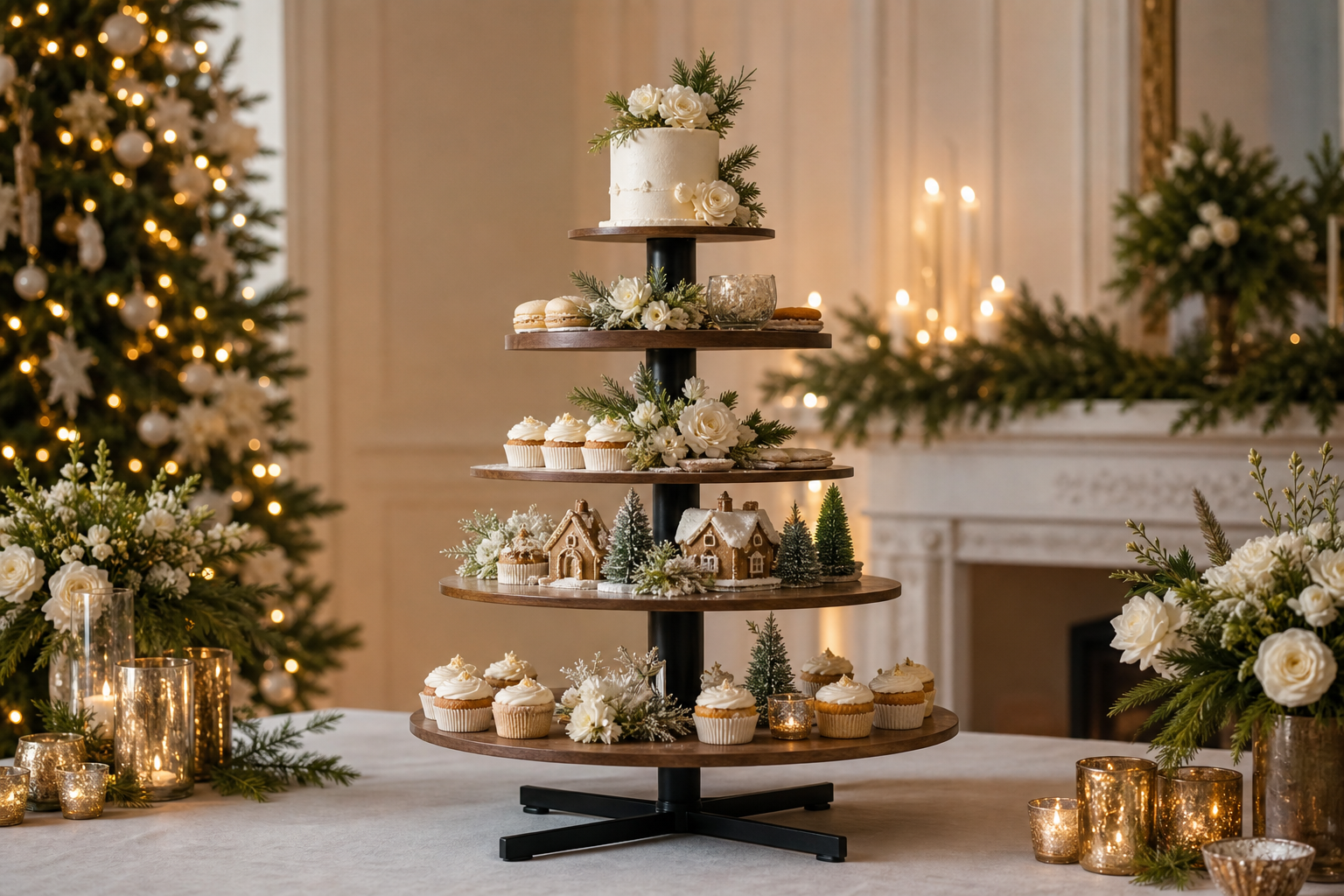
The Momentree Holiday Display Tree is a reusable, modular display platform designed for multi-occasion styling—including weddings. It is not a traditional food-contact cake stand; position cakes on their own boards or serving plates when using the platform.
What it is
- A modular, reconfigurable, six-tier display platform with a black metal center structure and a cross-shaped metal base. The base includes rolling wheels. Tiers have a wood-grain finish on MDF boards.
- Built vertically from the base by connecting center support sections and adding tiers progressively. You can add or remove tiers to vary height and the number of display levels.
Specs at a glance (for planning)
- Six round display tiers
- Full assembled height: 78 inches (approx. 6.5 ft)
- Adjacent tier spacing: 14 inches
- Tier diameters: 8, 11.8, 17.7, 23.2, 27.2, and 31.5 inches
- Stated total support capacity: over 220 lbs (do not exceed weight guidelines)
- Disassembles for flat-pack storage; foldable metal stand structure; powder-coated metal accessories
- Edge holes accept removable hooks for attachable décor/signage
Wedding-ready applications
- Dessert and cake display: arrange a cutting cake (on its board/plate) plus cupcakes, macarons, or favors across multiple tiers for a panoramic dessert moment.
- Wedding welcome station: greet guests with signage, photos, florals, and favor boxes.
- Floral décor tower: stage florals and candles-in-holders to flank the cake table backdrop.
Strengths and limitations vs. traditional cake stands
- Strengths: multi-level visual impact; adjustable tier count/height; reusable across wedding weekend moments; ample tier diameters for creative layouts.
- Limitations: not a direct food-contact surface; plan cake boards/plates; confirm table stability and safe traffic flow; indoor or covered outdoor use only; keep away from open flames/high heat.
Event safety notes (follow the user manual and venue policies)
- Secure the structure firmly before use; place on a level surface; do not overload the tiers beyond guidelines.
- Use indoors or in covered outdoor areas; keep away from open flames or high heat; supervise children around the structure.
- For cleaning and storage between events: dust with a soft cloth; remove accessories before storage; store the stand flat in a dry area.
Mistakes to Avoid When Choosing a Wedding Cake Stand
- Skipping size checks: buying by overall diameter without confirming the cake board or the stand’s usable flat area can cause overhang and instability.
- Underestimating weight: choosing a light, narrow pedestal for a heavy multi-tier cake risks wobble; wider, heavier plateaus are safer for large cakes.
- Confusing display with serving: using a display-only platform as if it were a food-contact stand. If food will touch the surface, verify food safety or use a barrier.
- Poor placement: setting the cake near sun, vents, speakers, or busy paths. Heat and vibrations harm structure and finish; place in a cool, shaded, low-traffic spot.
- Logistics gaps: not having the stand and table ready at delivery or lacking a designated receiver, forcing last-minute substitutions.
- Assuming vintage/ornamental ceramics are food-safe: some can leach lead; either verify safety or keep the cake on its own board/liner.
Momentree Expert Tips: Creative Wedding Cake Display Ideas
- Build your scene from the base up: vary the assembled tier count to match ceiling height and table space, concentrating focal items on mid-to-upper tiers.
- Stage the cutting cake on its own board/plate on an appropriately sized tier; cascade cupcakes or mini desserts on neighboring tiers for depth.
- Use the removable hooks along tier edges for lightweight signage, escort-card garlands, or floral accents (avoid open flame directly on or under tiers).
- Stability first: level the base, tighten all fasteners per the manual, and don’t exceed the stated overall capacity. If any wobble appears, recheck the base and screws.
- Keep the platform cool and clear: position away from heat sources and high-traffic paths; use indoors or in covered outdoor areas.
- Turn the platform into a welcome vignette earlier in the day (signage, photos, favors), then restyle it quickly for dessert service—same platform, new look.
Frequently Asked Questions
What are the different types of wedding cake stands?
Common options include pedestal stands, wide metal cake plateaus for multi-tier cakes, cupcake/dessert towers (often acrylic or wood), domed/cloche stands, and modular display platforms for multi-level styling. Each differs in stability, usable surface, and visual effect.
Can I use a display platform for serving wedding cake?
A display platform is for presentation and styling. If you plan to cut/serve on the display, the surface contacting food must be food-safe or protected with a barrier. Many modular platforms—including the Momentree Holiday Display Tree—are not traditional food-contact cake stands; place cakes on boards or plates.
How do I choose the right size cake stand for my wedding cake?
Confirm your cake board diameter with the baker and select a stand that matches or is slightly larger, allowing clearance for edge décor. For towers, ensure the top plate fully contains the cutting cake (and its board) without overhang.
What is the load capacity of a modular tiered display platform?
Capacities vary by product. As a planning reference, the Momentree Holiday Display Tree states support for over 220 lbs total; always follow the manufacturer’s guidance and avoid per-tier assumptions. Confirm placement on a level, sturdy table.
Is the Momentree Holiday Display Tree safe for direct cake contact?
It is not a traditional food-contact cake stand. Place cakes on their own boards or serving plates when using the platform.
What materials are best for wedding cake stands?
For direct food contact, choose smooth, non-porous, food-safe materials like glazed ceramic, glass, or stainless steel. Decorative metals, wood-look finishes, and acrylic are popular for style, but keep cakes on boards/plates if food safety isn’t verified.
Are modular display stands reusable for other events?
Yes. The Momentree platform is designed to be reconfigured for different moments (weddings, seasonal décor, dessert displays, welcome stations), so you can restyle the same base for new scenes.
What are common mistakes when selecting a wedding cake stand?
Sizing by overall diameter instead of usable area, choosing an under-built pedestal for a heavy cake, poor placement near heat/traffic, confusing display with serving safety, and failing to coordinate delivery/setup with your baker and venue.
Related Guides
- Tiered Display Stand Buying Guide
- Momentree Holiday Display Tree Product Overview
- Wedding Welcome Station Display Ideas
- Dessert & Cake Display Applications
Sources and Further Reading
- FDA Food Code 2022 (materials for food-contact surfaces)
- 21 CFR 109.16 – Ornamental and decorative ceramicware
- The Knot – Wedding Cake Stands (buyer tips)
- Zola – Wedding Cake Stands (types, sizing with baker)
- Premier Party Rentals catalog – Stand diameters and usable surface examples
- eFavormart – Example metal cake plateaus (size ranges)
- Shannon Turner Cakes – Cake table placement guide
- DecoPac – Non-slip pad (friction aid under boards/stands)


